What is Expressive Arts Therapy?



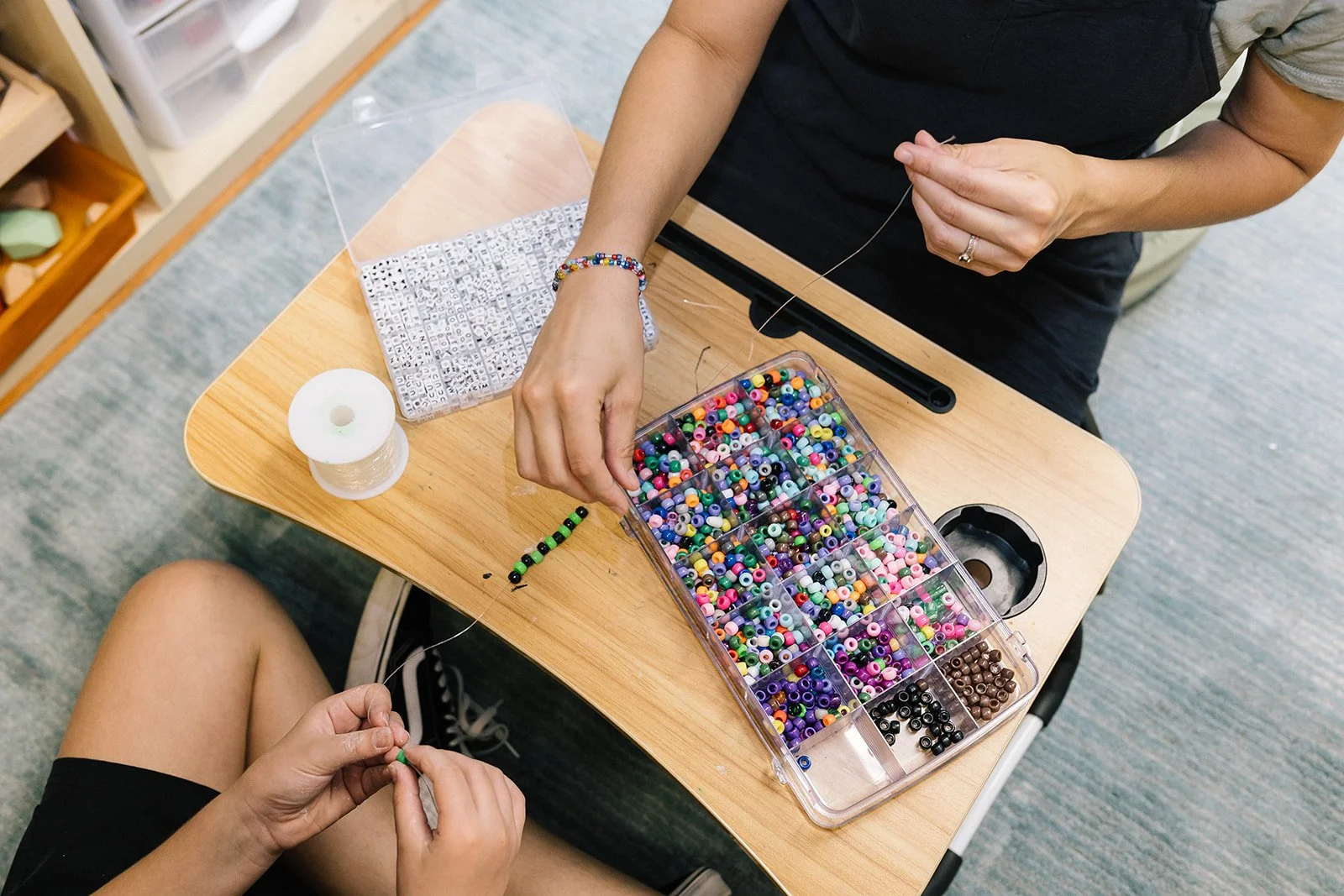
At Little House, expressive arts therapy can look a little different for everyone! There’s no right or wrong way to create here, and you don’t need any artistic experience to participate.
Expressive arts therapy brings together different creative modalities-including visual art, music, movement, drama, storytelling, writing, and play-to create opportunities for exploration and expression. The focus is on the creative process rather than the finished product. It’s not about making a masterpiece or creating something that looks a certain way. It’s about having space to explore what is happening inside of you in a safe, supportive, and collaborative environment.
We use art and creativity as another way to connect, communicate, explore, and make sense of our experiences. Sessions are client-led and collaborative, meaning you have a voice in how you participate and what we explore together. Your therapist may offer ideas, invitations, or creative activities connected to your therapeutic goals, while leaving room for you to choose what feels interesting, comfortable, or meaningful to you that day.
A session might include:
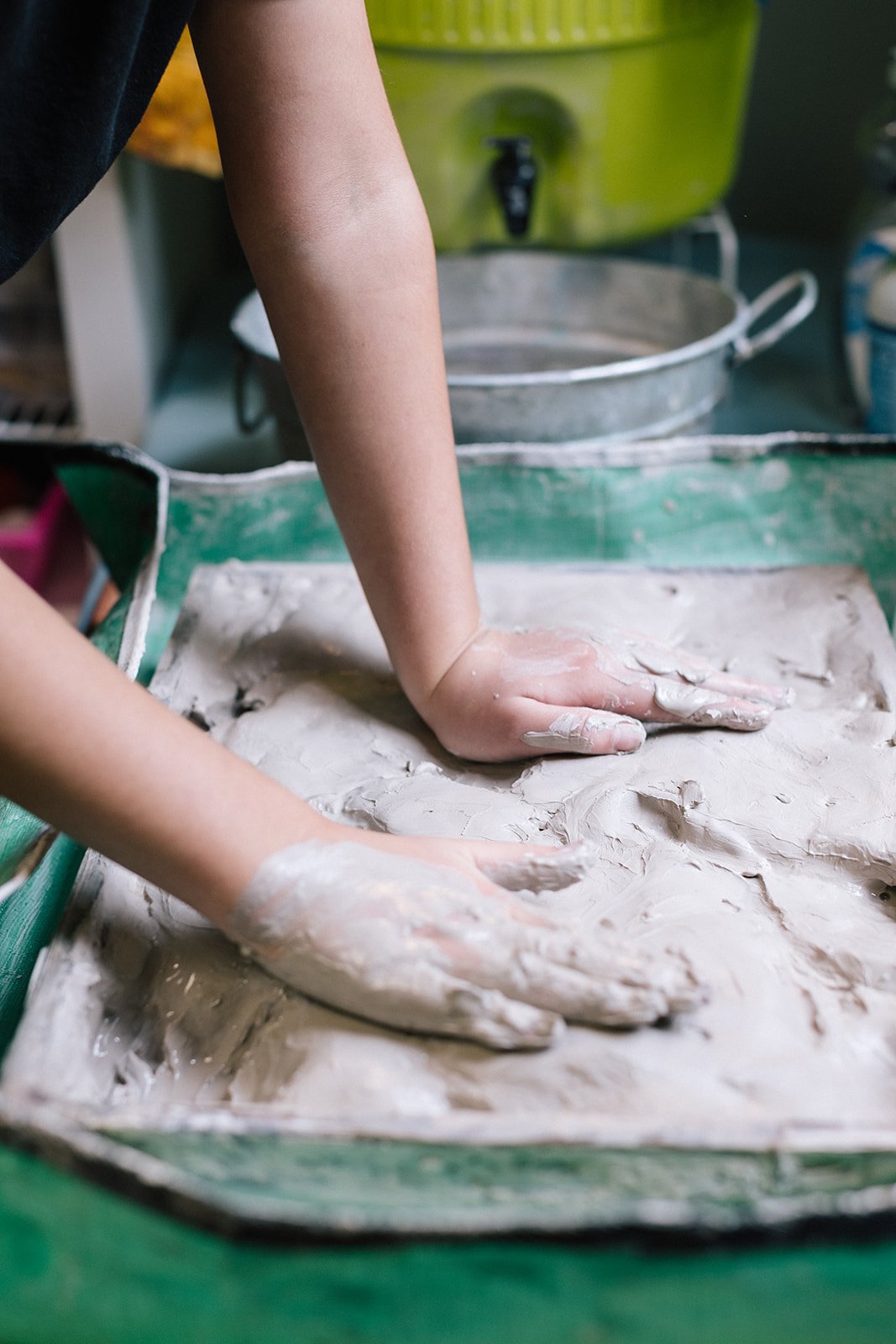
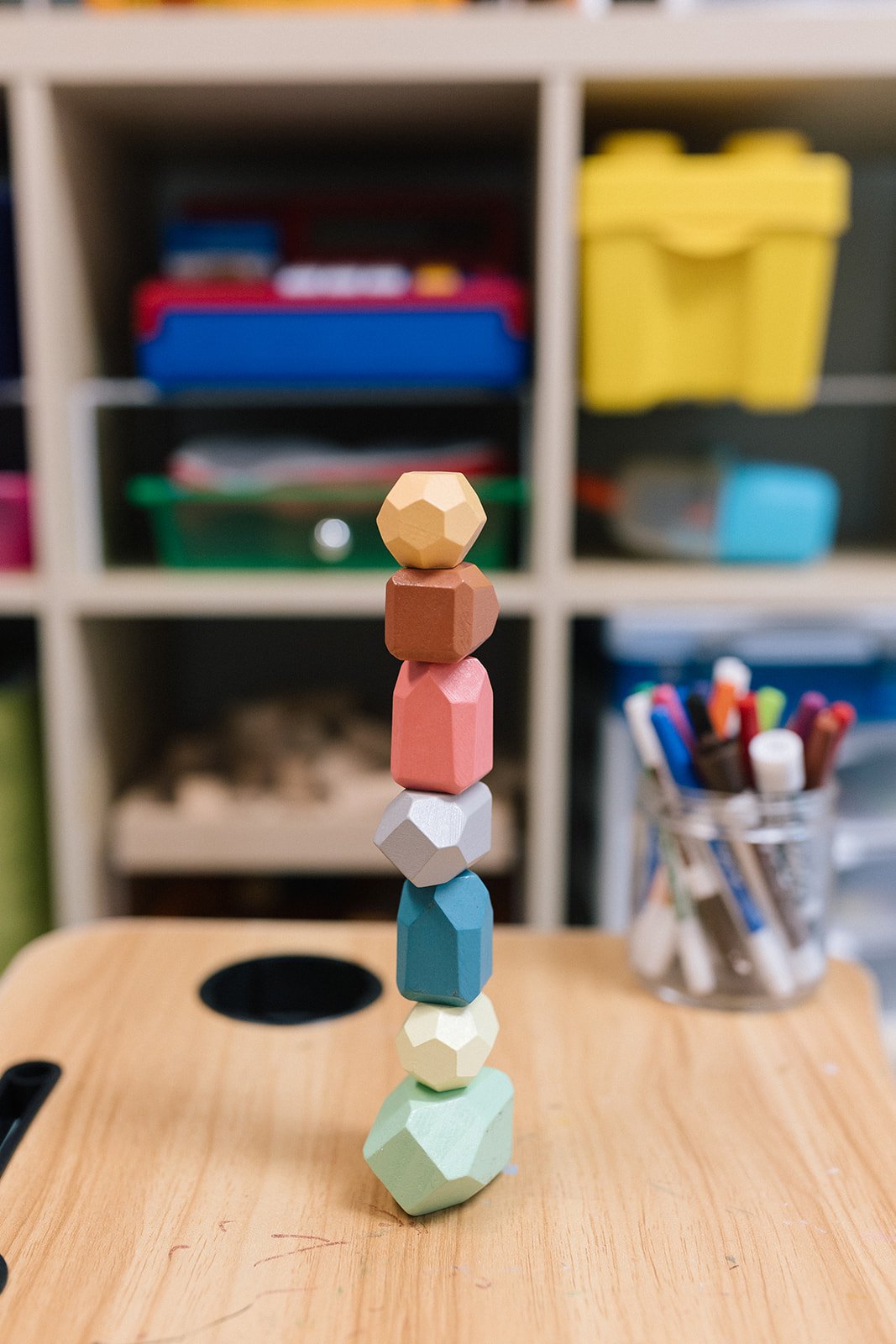
Creating: painting, drawing, collage, clay, sculpture, natural materials, sounds, singing, movement, writing, or other creative processes.
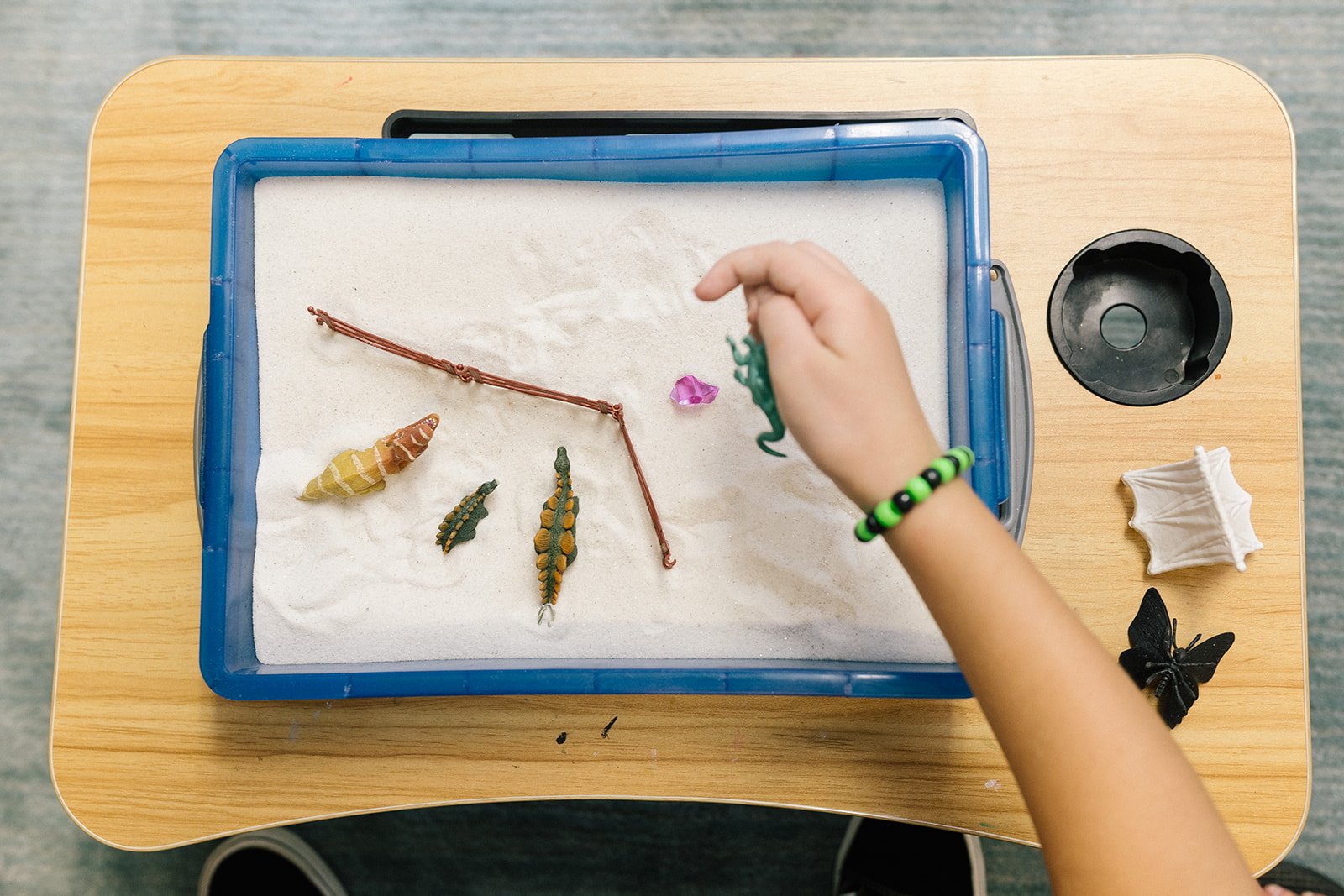
Playing: imaginative play, storytelling, puppets, games, sensory materials, and other forms of play.
Talking: checking in, sharing what's been happening, processing experiences, building skills, or simply talking about whatever feels important that day.
Exploring: using creativity to express feelings, ideas, memories, relationships, or experiences that might be difficult to put into words.
Practicing: exploring regulation, communication, self-expression, problem-solving, connection, and other skills in ways that feel natural and engaging.
Moving between modalities: sometimes an experience that begins in one creative form naturally leads us somewhere else. You might start by drawing and then write a story about what you created, move your body in response to a feeling, choose music that captures what you're experiencing, or turn a story into a scene or character. Moving between creative modalities can help us notice new perspectives, connections, and possibilities that may not emerge through words alone.
Following your lead: sessions are guided by therapeutic goals, but there is plenty of room for choice, curiosity, and spontaneity. We may have a plan when you arrive, or we may discover together what feels most helpful that day.
One of the unique parts of expressive arts therapy is that we don't have to stay in one creative modality. An experience can move from one form of expression into another, allowing different parts of an experience to emerge and connect. Sometimes something that is difficult to express through talking becomes easier to explore through color or movement. A drawing might inspire a story. A song might bring up a memory that becomes something we explore through writing. A movement might become a character or scene.
This movement between modalities can help us connect thoughts, emotions, physical sensations, memories, and imagination in new ways. Rather than needing to explain everything right away, we can allow the creative process to show us something first and then become curious about what we notice to support deeper understanding of our experiences.
For example, a child might spend part of a session making a clay character while talking about a difficult friendship. A teen might create a collage exploring different parts of their identity and then choose music that represents one of those parts. Another client might paint, listen to music, and talk as they create. A caregiver might create alongside their child while we work on connection and communication.
Some sessions might involve lots of creating and talking, while others might include playing, sitting quietly, moving, listening, or trying something completely new. Sometimes the most meaningful part of a session is simply having a space where you can create, explore, and be yourself without needing to make something “good.”
You don't have to make “good art.” You don't even have to know what you want to make. The creative process can simply give us another way to slow down, notice what's happening, and explore what matters to you.
And we don't believe that every piece of art needs to be interpreted. We aren't looking for hidden meanings or trying to analyze your artwork. Instead, we get curious together about your experience: What did you notice? What was that like? Did anything surprise you? Is there something you want to explore more?
Expressive arts therapy isn't an art class, and there is no expectation of artistic skill. It is a space to create, connect, play, explore, move between different ways of expressing yourself, and be yourself-with a therapist alongside you!